
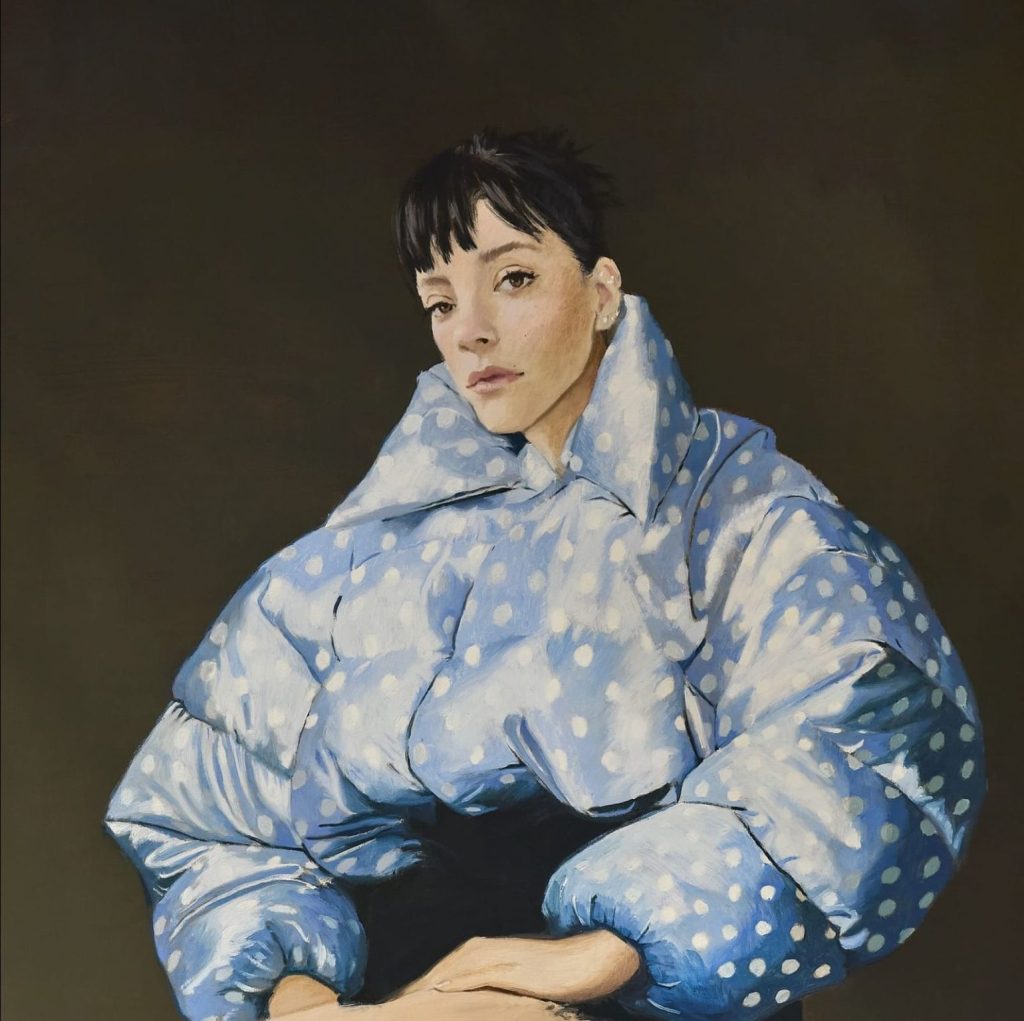
The cover art for Lily Allen’s new album, ‘West End Girl’ illustrated by Nieves Gonzalez.
By Talia Bumanglag
After seven long years, Lily Allen has re-entered the music scene with her latest album, “West End Girl.” With 14 distinctly different tracks and a run time of 45 minutes, Allen tells the story of her relationship with her ex-husband, David Harbour, and the many struggles she encountered while trying to maintain this relationship long-distance that ultimately ended in divorce.
The album starts off upbeat with its title track, painting a picture of a happy couple moving to a new city and adjusting to life together. The song then quickly transitions to a phone call from her lover which Allen is heard picking up.. Allen’s hesitant responses show the unpleasant nature of the call, but also her willingness to compromise. From this point on, an intimate story of an open relationship gone wrong unfolds, and she details the many tribulations she faced trying to keep her relationship intact.
Allen doesn’t hold back at all. Her courage to share such a vulnerable portion of her life makes this album feel relatable and sympathetic. Audiences are drawn to music that speaks to them, and this album does exactly that.
One of the standout songs is track 5, titled “Madeline.” Lyrically, the song is a direct conversation between Allen and her husband’s mistress, Madeline. Allen begs Madeline for answers on the truth of their hidden romance, and while Madeline gives her the answers she’s looking for she’s not sure whether it’s true.
The production of this song specifically is unique from the rest of the album. The instrumentals draw on a lot of elements traditionally used in flamenco music. The acoustic guitars and strumming pattern are reminiscent of a western film score, further adding to the confrontational subject of the song. The switch from the western first verse, to a synth-y, choppy drum beat completely changes the vibe of the song from wanting to level with Madeline, to doing whatever it takes to reveal the truth about their affair.
While the story stands out, the uniqueness of the production of this album is equally as impactful. Produced by Alessandro Buccellati, Blue May, Chrome Sparks, Jason Evigan, Kito, Leon Vynehall, Leroy Clampitt, Micah Jasper and Oscar Scheller, the alt-pop sound mixed with electronic and synth is unique and truly makes this a Lily Allen album.
The production is quirky with her use of key changes, narration breaks, and autotune. She emulates a vibe similar to that of “BRAT” by Charli XCX, mixed with the emotional turmoil of “Lemonade” by Beyoncé. Its catchiness makes this album memorable, and it stands out completely from the rest of her discography.
The timing of this album is also notable. Allen was married to Harbour for four out of the seven years she was on hiatus, and released “West End Girl” only a month before the concluding season of “Stranger Things”–featuring David Harbour–is set to come out. With no lead singles and no prior hints of an album release, Allen truly is letting the music speak for itself. Whether or not the timing of the release was intentional is still unclear, but the implications and effect that this release has on audiences are obvious enough.
While many people have revered the album online and praised it for its uniqueness in storytelling and craft, others have dismissed this album completely. Her public image is nowhere near squeaky clean, but it is important to note that she is not and has never claimed to be the “perfect victim”.
Regardless of the artist, music has a way of providing comfort in the fact that you are not alone in your experiences. Complicated relationships and messy breakups are universal, and “West End Girl” truly encapsulates that experience in an artistic way. The pain Allen endured led to one of the most raw yet painfully beautiful breakup albums to come out within the last year.
 EVE WAS FRAMED